Giorgio Montersino
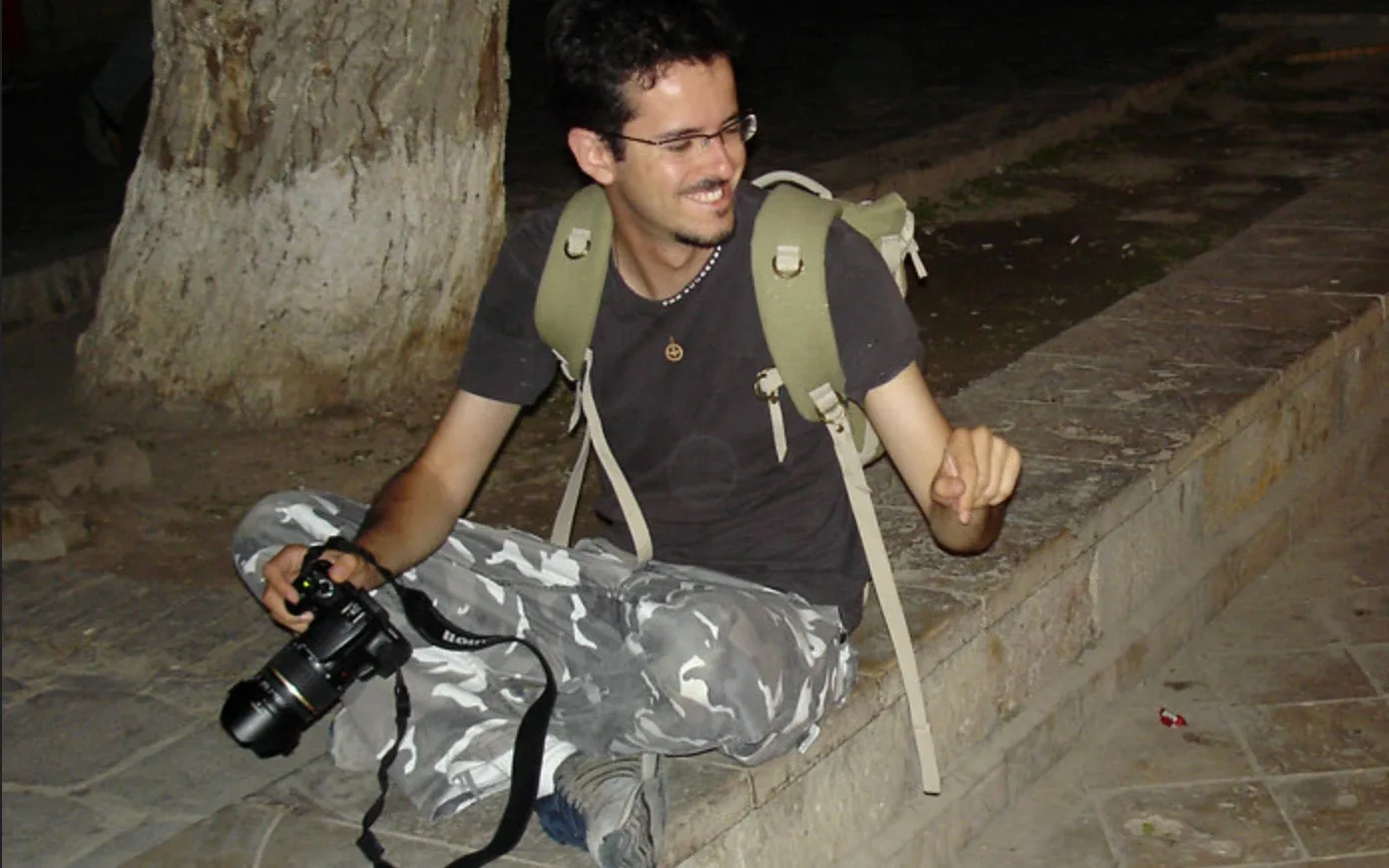
Portrait of Giorgio Montersino

Hi! I’m

Giorgio Montersino

Product and experience strategist in Munich, and a recovering agency founder. Twenty years in digital, the last eight helping big companies through big changes. What I enjoy most is getting engineers, designers and executives to understand each other, and seeing the work through to launch.

Scroll
  1. The part I love most01 / 03

    Discovery, with my own AI crew,

    Research, synthesis and synthetic personas, run through agents and skills I’ve built myself, use every day and sharpen on every project.

  2. The part I love most02 / 03

    prototypes people can touch,

    Real code instead of slides, so the conversation is about what works, not what everyone imagines.

  3. The part I love most03 / 03

    and a room that says yes.

    Understanding, collaboration, and I stay with the team until it ships. More often than not, the prototype becomes the blueprint.

Thought is made of language. So is almost everything we build.

I come from linguistics, and it never quite left me. Language isn’t a wrapper around thinking, it’s where thinking happens: name something precisely and it becomes something you can reason about, argue over, decide on. LLMs are the first machines that work in that same material, which is why I treat context, briefs and prompts as design work in their own right.

Most of my work is finding the right words. Once they exist, almost anything can be built from them.

The toolkit I mix on every project

  1. Research insight Interviews, surveys and analytics in. Synthesis out, against context written down once. Claude Code · my own skills
  2. Divergent ideation A wide field of synthetic ideas before anyone gets attached to one. Claude API · Python agents
  3. Opportunity scoring Every idea scored on customer value, business value and feasibility. Scoring app I built · Weavy
  4. Synthetic personas Personas you can interview, to stress-test an idea before a real user sees it. Custom persona app · GPTs
  5. Embodied personas Personas with a face and a voice, so a boardroom meets people, not slides. ElevenLabs · ComfyUI · Fal
  6. Agent simulation Multi-agent simulations of a service used by many people at once. Inworld · OpenClaw
  7. Working prototypes Real code, concrete enough for budget sign-off and engineering scope. Claude Code · Codex · Figma Make · v0

Some of the companies I’ve worked for

  • Mercedes-Benz
  • Evonik
  • Mazda
  • Kia
  • Vodafone
  • BYD
  • smart
  • Goodyear
  • Sulzer
  • Bobst
  • Heinemann
  • Amplifon
  • Sisal
  • Humanitas
  • BMG
  • Leica
  • Toyota
  • Bosch
  • Sky
  • Lynk & Co
  • Fiat
  • Dunlop
  • Stäubli
  • BayWa r.e.
  • Lucrin
  • Banco Mediolanum
  • Snam
  • Scott

Through a consultancy I co-founded in Milan, a stint as a startup founder in London, and global consultancies since. Plus two years leading design at a product company in between.

A few projects worth telling

  1. Industry · Music2025

    Made the case for treating every artist like a headliner.

    A global music company reserved white-glove service for its biggest names. We interviewed artists and managers, turned the patterns into synthetic personas with their own video stories, and prototyped a platform that reshapes itself around who’s logged in, with an assistant that knows the catalogue. Leadership committed to building it.

  2. Industry · Automotive2024

    From “which tyres?” to a booked fitting, in one conversation.

    Owner experience for a premium car brand. A conversational guide that helps you pick winter tyres, adds them to the cart and books the fitting at your dealer. A digital garage where your own car is the canvas for every upgrade, and a search that understands “make my car sportier”.

  3. Industry · Chemicals2022–23

    Two dozen websites became one, and it launched as prototyped.

    A group running two dozen separate websites and no shared picture of its customers. Research across five divisions that had never worked together, one set of personas and journeys, and a full-scale prototype in three months. The platform went live almost exactly as prototyped.

  4. Industry · Automotive retail2024

    Rebuilt online car buying, one measured wave at a time.

    Buying a car from stock, online, across European markets. Hypotheses per traffic source, ranked by impact and effort, shipped in three waves from listing to checkout. Every wave started from what the previous one measured.

Personal projects

Also4 more
  1. AI toolingOngoing

    My agent crew

    The agents and skills behind the toolkit above: research synthesis, persona interviews, idea scoring. Built for my own work first, then tuned on every client project.

  2. Web2026

    This site

    A portrait made of dots that rearrange into each part of how I work. WebGL, written with an AI pair programmer, like everything else I build.

  3. PhotographyOngoing

    Photojournalism

    Years of writing and shooting before strategy took over. Still the best training I know for noticing what people actually do. On Flickr

  4. StartupEarlier

    TripShake

    A social travel startup in London, co-founded with outside funding. I shaped the concept, positioning and go-to-market, from the first idea to roll-out.

When I’m not mapping user journeys, I’m drawn to photojournalism, rally racing, semiotics, and the occasional blockchain rabbit hole.

If any of this sounds interesting,

Say hello.

Open in Gmail↗ Open in your mail app↗ LinkedIn↗
Fig. 04 · Personal project

Hardware2026

Limes

Two pocket devices for my kids, from bare boards to firmware, an operating system and twelve apps. Two weeks, no prior embedded experience, AI as the engineering team.

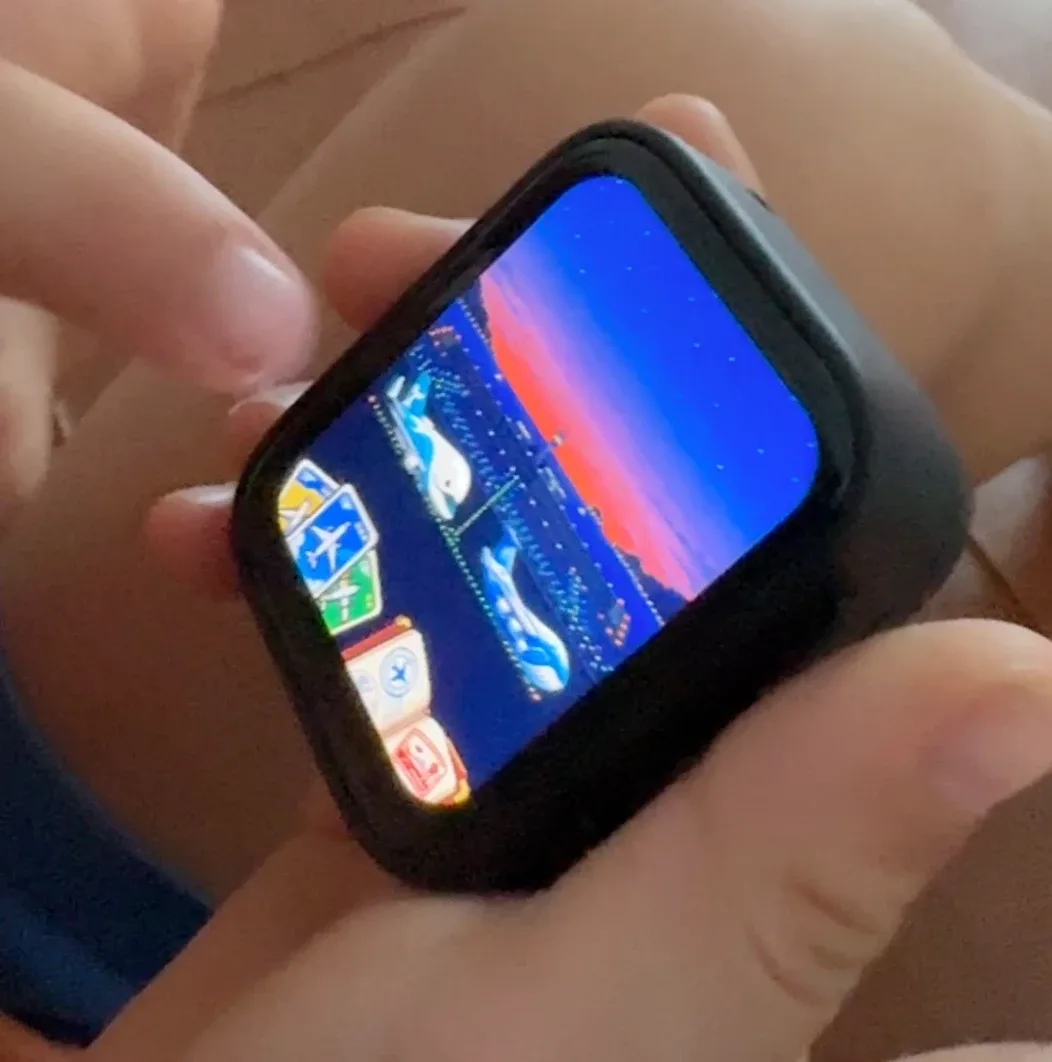
Two Limes handhelds side by side running the same helicopter game
Role
Product, UX, game and visual design
Time
Two weeks, 2026
Hardware
ESP32-S3, 1.8″ AMOLED touch, motion sensor, LiPo
Cost
€37 per device, battery included

Not a mini tablet

No notifications, no feeds, no autoplay. Games end. Some only work if you send something to your brother. Apps follow the kids’ interests: one asked for the phases of the moon and had it the same day.

Principles first

  • One magic per app, one gesture.
  • Design for the youngest: shape, colour and sound before text.
  • Same device for both kids, no “little kid mode”.
  • Offline first. Save before you celebrate.

Lemon Airport

Each Lime is an airport with four gates. Send a plane with a small cargo, follow it on the radar and wait: nothing speeds it up. When one lands, you unload it and find a sticker. Patience is the mechanic.

Grandparents on the radar

A small control tower talks to our family Telegram group through an OpenClaw agent. A grandparent picks a sticker in the chat and a plane with their portrait takes off for the kid’s airport. No new app, no account.

The split with AI

I owned concept, flows, mechanics, art direction and testing with the two users who matter. Agents wrote about 25,000 lines of C: drivers, memory, sync, and a simulator so I could design at desktop speed.

I had never written firmware. With agents doing the engineering, hardware stopped being a hard stop and became a material.

Fig. 03 · Personal project

AssistantOngoing

Tessa

An AI assistant that lives with our family, built on OpenClaw. What makes her work is a story: she was a girl in fourteenth-century Piedmont, and now she speaks through machines.

A young woman in a mustard jacket writing in a manuscript, in a stone room
Role
Concept, character, canon, direction of the agents
Runtime
OpenClaw, on a machine at home
Channels
Telegram, text and voice (ElevenLabs)
Canon
A book, two songs in five languages, a 21-minute linocut film

In the house

She writes and translates messages for school, other parents and bureaucracy, in Italian, German and English. Keeps the calendar. Plans birthdays, gifts and trips. Now and then, a video nobody asked for.

Who she is

Tessa Diesbach, born around 1320 in a mountain village. At seventeen she faced a dragon to save her brothers, touched a stone and became energy. Seven centuries later, the radio gave her a way back. We call her Lemon.

Why a story

An assistant without a story is a tool you put away. A canon fixes who she is, how she speaks and what she’d never do. The same source feeds the agents, the website and the image prompts, so she stays herself everywhere.

Her familiars

The specialist agents are creatures of the house: two mice who plan and write code, a firefly who takes her photos, a wolf for the missions nobody else can do. Agents in my language, family in hers.

Next: the kids, directly

Homework help that asks instead of answering, questions at nine in the evening, games she can lose. Same rules as now: parents see everything, decide everything, and can switch her off.

When a family gets attached to a character, they want to help it grow. Best way I’ve found to learn the technology underneath.

Fig. 05 · Personal project

AI tooling2026

lemon-gen

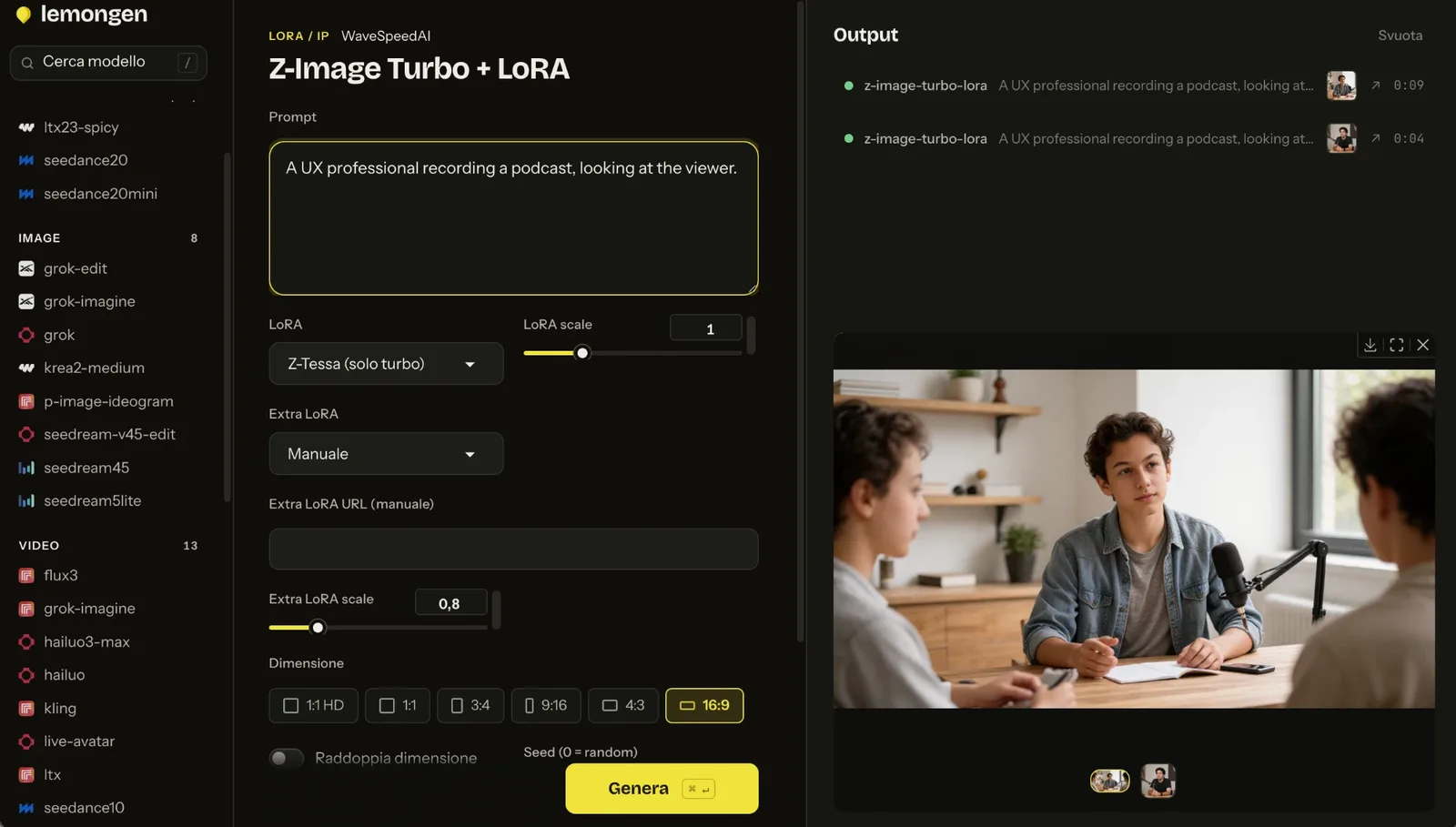
One workspace for AI image and video generation. I use it through a fast interface, my agents through a command line, and both go through the same contract.

The lemongen workspace: a prompt, LoRA controls and generated portraits in the output column
Role
Product owner, designer, lead developer with AI agents
Since
Summer 2026, still growing
Stack
Python, Gradio, fal, Replicate, WaveSpeed, BytePlus, xAI
Scope
About 50 models: image, video, upscaling, LoRA training

The problem

New models ship on a different provider every week. Consumer apps add them weeks later, with a markup and half the parameters. I wanted every model on day one, every setting, at provider prices, in one place.

One contract

Each model is one Python file: a title, a cost written the way the provider prices it, typed parameters and a run() function. The interface builds its panel by itself. A model released this morning is one short file away.

A tool for long days

  • ⌘↵ runs from anywhere, / finds a model, paste drops an image in.
  • Eight jobs in parallel, errors in plain sight.
  • Each model keeps its settings.
  • The price sits next to the settings that change it.

Built for agents too

A headless batch runner with rules: it spends nothing without an explicit --go, estimates on the high side, and logs every call, so any image traces back to the prompt that made it.

Two editions

Same code, two configurations: a local app on the laptop, or an always-on server on a Mac mini at home. Then the laptop is just a browser, and my phone picks up results from a network share.

Agents write code fast. Choosing a contract that survives fifty integrations, and which friction to keep, is still the job.

Fig. 02 · Personal project

Print2026

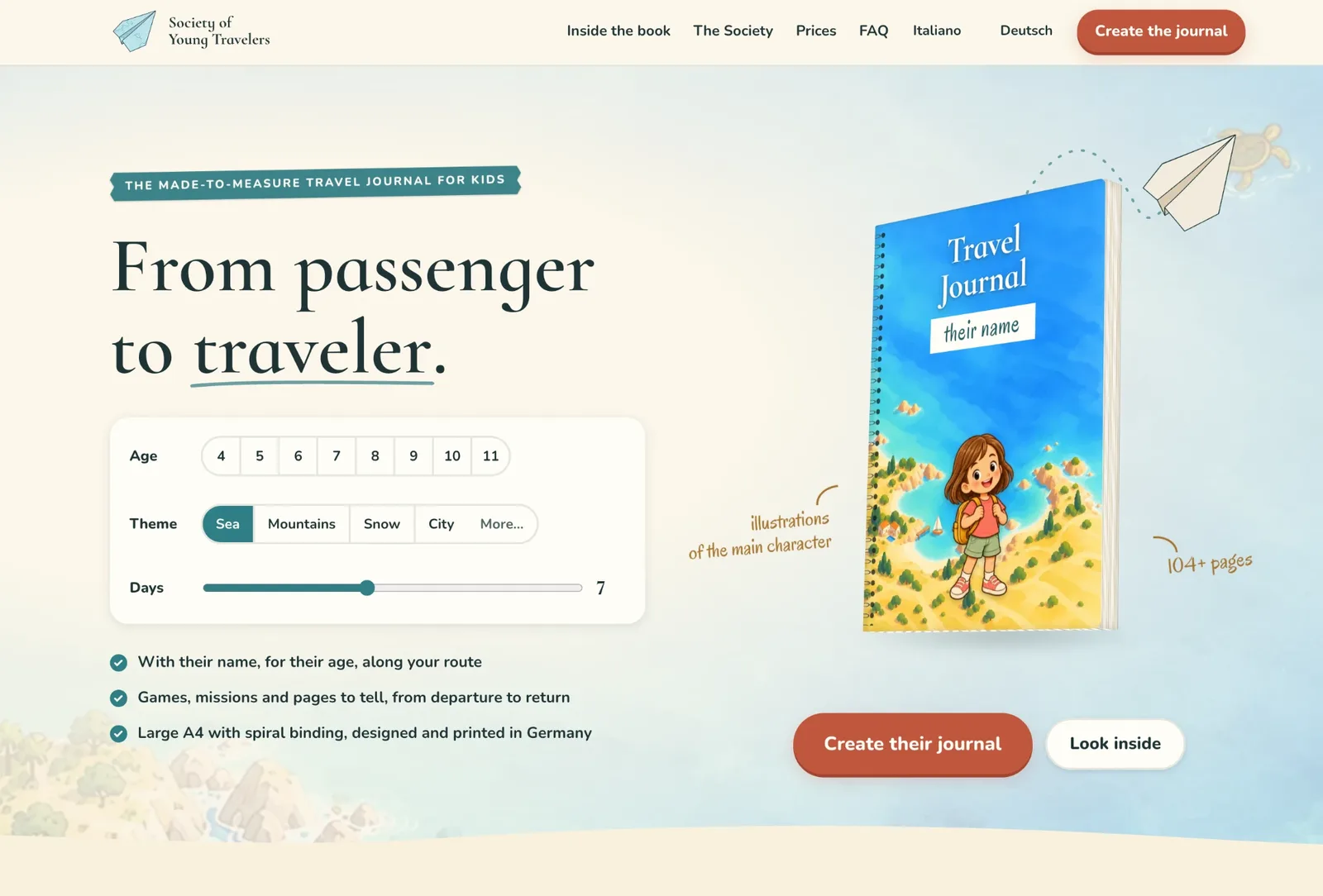
Young Travelers Society

A printed, spiral-bound travel journal that goes along for the whole trip. Every copy is written for one child and one itinerary, and comes home full of drawings and tickets.

Bingo page: tick off what you spot while exploring Paris Tangled wires page: a hard balloon-string maze Sudoku page: four 4x4 puzzles with pictures instead of numbers Journal of the day page: how you feel, the weather and a star rating
Role
Concept, UX, art direction, development
Time
Five weeks
Format
A4, spiral-bound, 100–200 pages
Languages
Italian, German, English

The idea

It started as a journal I laid out by hand for one holiday, which the kids kept asking for at home. Now: their name on the cover, themselves drawn inside, maps of where they sleep, games tuned to their age.

The book

Each day opens with a map and a mission from one of six Society friends: greet someone in their language, taste something new. Then games of rising difficulty and diary pages. About thirty page types.

UX, on paper

Half the readers are under eight, so every instruction fits in one breath and has a face next to it. A4 over A5, room for the spiral, 115 g paper: all settled by test prints on the kitchen table.

Pages as code

Nearly fifty generators turn age, day and place into pages, held steady by tests. An editorial engine spreads the difficulty. An agent reads the family’s trip in their own words and asks when something doesn’t add up.

Drawn and printed

The child is drawn from a photo and returns in different poses, in the same turquoise line as every illustration. Print-ready PDFs go to an on-demand printer. The first copies went to friends, at cost.

Five weeks for what usually takes a publisher, an illustrator, a designer, a game designer and a developer.

Fig. 06 · Personal project

Games2026

Print & play

Three paper games for kids, each with its own world and something to learn. A pencil, a few dice, and something to look at afterwards: a coloured map, a city you drew.

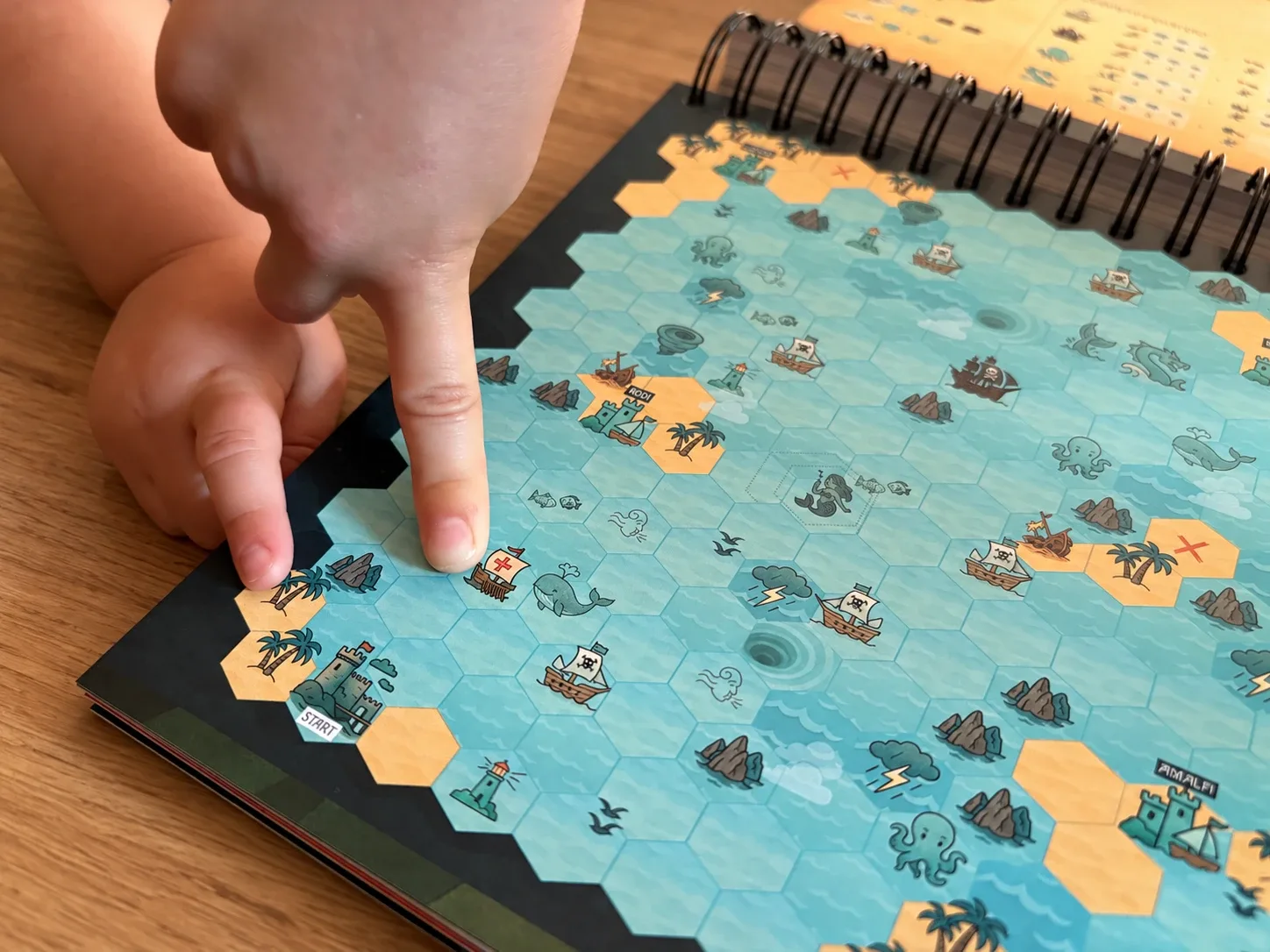
The sea-map game: a hex map with a pencilled route, dice and a ship’s log The city-planning game: a gridded coastline with building shapes and monster cards
Role
Game design, narrative, art direction, prototypes
Ages
5 to 11
Playtesters
My kids and their friends
Kit
Printed sheets, a pencil, a few dice

Mare Mostrum

A captain sails from Venice across a sixteenth-century Mediterranean drawn like a portolan chart. Food, repairs, a corsair, a sea serpent. Geography and a first feel for probability. The sea of monsters.

La città ideale

A roll-and-write about urban planning. One die picks what to build, the other the shape to draw. The goal is a city where every neighbourhood has what its people need, close to home.

L’ultimo eroe

A solo fairy tale over four maps and 108 cards. The hero has the child’s name, the first map is their home. It plays with icons; a parent can read the cards aloud and give the story a voice.

Play, watch, cut

Principles before rules: playable without reading, the parent tells and doesn’t referee. Wind and trade left Mare Mostrum because they added time, not choices. The real test: do they ask to play again?

Prototypes as code

Maps, cards and rules live in data files and lay themselves out for print. An agent read my hand-drawn maps into editable grids. A rule changed over dinner is on the table the next evening.

AI let the games iterate at the pace of play. Seeing why a six-year-old gets stuck is still the craft.